
About Our Free Gutter Quote Service
We connect Colorado Springs-area homeowners with independent local gutter installation, guard and repair companies for free, no-obligation quotes.
Get a Free Quote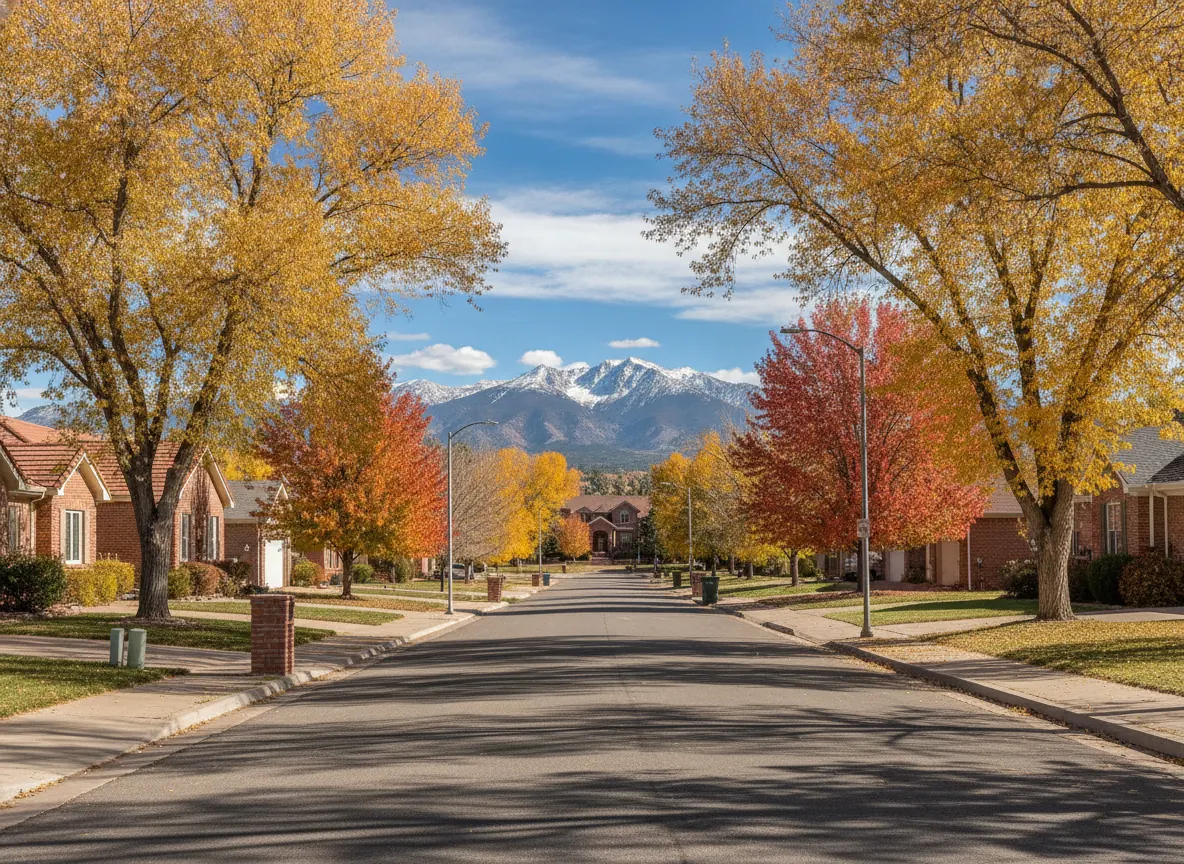
How the quote service works
Colorado Springs Gutter Installation is a free quote service. You tell us what you need (seamless gutters on a home that never had them, a replacement after a hail season, gutter guards under ponderosa pines, more downspouts or longer extensions, a seam that drips or a run that sags, or heat cable for a roof edge that ices up every February) and where the property is in Colorado Springs, Security-Widefield, Falcon, Fountain, Cimarron Hills, Black Forest, Monument, Gleneagle, Manitou Springs, Woodland Park or elsewhere in El Paso or Teller County. We pass your request to independent local companies that install, replace, guard and repair gutters so they can contact you with a quote.
The quote is free and you are under no obligation to hire anyone. We usually reply the same day.
What this site is not
We are not a gutter company. We don’t install, hang, replace, repair, seal or clean anything, and we don’t sell gutters, guards or heat cable. The companies that quote your job are independent businesses. They set their own prices, scope, schedule and terms, and any agreement is between you and the company you choose. Prices on this site are typical ranges labeled as estimates, and the images are illustrations.
Colorado Springs Gutter Installation is an independent quote service and is not affiliated with any gutter company of a similar name.
Who licenses gutter work in the Pikes Peak region
Colorado has no state contractor license for gutters. The state licenses electricians and plumbers; every other building trade is left to the city or county. In this region that means the Pikes Peak Regional Building Department (PPRBD), created by a 1966 intergovernmental agreement between El Paso County and the City of Colorado Springs. PPRBD issues permits and contractor licenses for unincorporated El Paso County; the cities of Colorado Springs, Fountain and Manitou Springs; the towns of Calhan, Green Mountain Falls, Monument and Palmer Lake; and, in Teller County, the City of Woodland Park. Its main line is 719-327-2880 and its permit counter is 719-327-2883. Unincorporated Teller County (Divide, Florissant) is handled by the Teller County Building Division, 719-687-3048, which also has no gutter license class.
PPRBD licenses only work that requires a permit. Its code, the 2023 Pikes Peak Regional Building Code (which adopts the 2021 International Residential Code and took effect June 30, 2023), says in Section RBC201.3 that “a license or registration, as applicable, shall be required to perform any work requiring a permit.” PPRBD has no gutter license class: its specialty classes cover roofing, siding, masonry, foundation repair, stucco, glazing and similar single trades. Gutters and downspouts do not appear in its permit lists, and they do not appear in its list of work exempt from permits either (that list exempts “repairs to roofing and/or siding when the repair constitutes less than 100 square feet”). So stand-alone gutter installation, replacement, guard and repair work generally needs no PPRBD permit or license. Confirm with PPRBD for your project; the permit counter can tell you in a short call.
Gutters installed as part of a re-roof follow the roofing rules. PPRBD’s re-roof guidelines call for a permit on any roof repair or replacement over 100 square feet, a D-1 licensed roofing contractor unless the owner-occupant does the work on their own primary residence, a Class A roof covering on one- and two-family homes in Colorado Springs, drip edge at eaves and rakes, and an ice barrier on properties above 7,000 feet, running from the eave to at least 24 inches inside the exterior wall line. Monument (6,982 ft), Black Forest (7,369 ft) and Woodland Park (8,481 ft) sit on or above that line; the Colorado Springs airport (about 6,187 ft) and Fountain (5,558 ft) do not.
Two more pieces of the code matter to homeowners. Under RBC201.3, a person who owns and lives in (or intends to live in) a one- or two-family home may do their own work on it without a license, so a homeowner may hang their own gutters or re-roof their own house. Under RBC201.4.1, an owner who does not live in the building, such as a landlord, may not perform work requiring a permit unless licensed. And before PPRBD issues any contractor license, the contractor must file a certificate of liability insurance with the Building Official, plus a certificate of workers’ compensation coverage if the business has employees (RBC201.7). A gutter-only company may hold no PPRBD license at all, which is legal for gutter-only work, so ask that company for its certificates directly rather than assuming a license stands behind them. We do not verify any company’s licenses, permits or insurance ourselves. Our guide to permits and licensing for gutters in Colorado Springs goes into more detail.
This is general information, not legal advice.
Hail, insurance and Colorado’s roofing law
Hail is why so many gutters in this market are on their second or third set. The July 28, 2016 storm produced $352.8 million in insured losses from 84,500 claims (Rocky Mountain Insurance Information Association), with the hardest-hit neighborhoods on the east side, and El Paso County issued just over 34,000 re-roof permits that year. The pre-dawn storm of June 13, 2018 dropped baseball to 3-inch hail on Fountain, Security-Widefield and southern Colorado Springs ($169 million, 26,000 claims), and the August 6, 2018 storm put 3- to 4-inch hail on the Cheyenne Mountain Zoo. In June 2023 El Paso County recorded its wettest June on record, and PPRBD issued more than 17,000 re-roofing permits that year, a 179% increase over 2022.
Colorado’s roofing law (SB12-038, CRS 6-22-101 to -105) governs what happens when a roofing contractor does insurance-funded work on a house. It requires a written contract with the scope, dates, approximate cost, the contractor’s address and insurer, and the cancellation policy; it gives the homeowner 72 hours to cancel after the insurer denies a claim in whole or in part, with any deposit returned within ten days; it bans roofing contractors from paying, waiving or rebating any part of an insurance deductible; and it bars them from acting as public adjusters. The law covers “roofing work” on a roof and contracts over $1,000; gutters are not named in it. When a roofing contractor writes one contract that covers the roof and the gutters, that contract carries these terms. A gutter-only contract from a gutter-only company is not clearly covered, so the written quote and warranty you ask for below are your protection. Separately, Colorado insurers may not unreasonably delay or deny a claim (CRS 10-3-1115).
We cannot tell you whether your gutters are covered, and neither can a contractor. Ask your insurer what your policy covers. Read more in our guide to hail-damaged gutters and Colorado’s roofing law and on the gutter replacement page.
This is general information, not legal advice.
What to ask any gutter company
Because gutter-only work carries no license here, the paperwork you ask for matters more than it would in a licensed trade. Use this checklist when the quotes come in:
- Proof of insurance. Ask for a current certificate of liability insurance and, if the company has employees, proof of workers’ compensation coverage, before anyone sets a ladder against your fascia.
- A written, itemized quote. It should name the material (aluminum, galvanized or galvalume steel, copper), the coil gauge, the width (5-inch or 6-inch K-style, or half-round), the hanger type and spacing, the number and size of downspouts (2x3 or 3x4), extensions and splash blocks, the color, and whether removal and disposal of the old gutters is included. Typical ranges are in the cost guide.
- The warranty terms in writing. Ask for the manufacturer’s finish warranty and the installer’s workmanship warranty as documents, not as a sentence on the phone. Colorado’s consumer-protection law (CRS 6-1-105(1)(r)) requires any “lifetime” guarantee to disclose conspicuously what “lifetime” means, so ask what it means.
- If the gutters are part of a re-roof, ask for the contractor’s PPRBD D-1 roofing license number and the permit number, and check both on PPRBD’s public contractor and permit search. CRS 6-1-105(1)(z) makes failing to obtain a required permit a deceptive trade practice.
- If insurance money is paying for a roofing job, ask for the contract terms CRS 6-22-103 requires, including the 72-hour rescission statement. Walk away from anyone who offers to absorb part of your deductible; the law prohibits a roofing contractor from doing so.
- A drainage plan. Ask where each downspout will discharge. The Colorado Geological Survey’s homeowner guidance on expansive soils says water should be discharged no closer than 5 feet from the foundation and recommends a positive slope of 5 percent in the first ten feet next to the house. Colorado Springs is mapped for steeply dipping expansive bedrock on its west side, so this is not a formality. See downspouts and drainage.
- Who wires a heat cable system. Plug-in cable is a product; a hard-wired circuit is electrical work, and PPRBD’s license rules require a Colorado electrical contractor’s license for it. Ask who will do that part. See heat tape and ice dams.
- HOA rules. Check your association’s architectural guidelines for gutter color and profile before you choose. Colorado law (CRS 38-33.3-106.5(3)) says an association cannot prohibit fire-hardened building materials, but color and style rules otherwise stand.
- Timing. Colorado Springs averages 15.91 inches of precipitation a year, with July (3.12 in.) and August (2.96 in.) the wettest months and 36.8 days with a tenth of an inch or more (NOAA 1991–2020 normals, Colorado Springs airport). Snow averages 32.5 inches, March the snowiest month, and there are 159.7 nights at or below freezing. Spring and fall are the dry-ground install windows; ask how soon the company can come and whether a storm changes the plan.
Selling later? Colorado’s Seller’s Property Disclosure form (SPD19) asks about gutter or downspout problems, roof damage, hail damage, flooding or drainage, and any property insurance claim submitted. Keep your quotes, receipts and warranties. Our guide to selling a house in Colorado Springs with gutters on the disclosure form explains more.
To see what a typical job involves, read how gutter installation works, check typical prices in the cost guide, or browse the FAQ.
This is general information, not legal advice.
Where we help
Requests come from Colorado Springs and across El Paso County, including Security-Widefield, Falcon and Peyton, Fountain, Cimarron Hills, Black Forest, Monument and the Tri-Lakes area, Gleneagle and Northgate, and Manitou Springs, and from Woodland Park in Teller County. Woodland Park’s building services run through PPRBD; the unincorporated county around it (Divide, Florissant) runs through the Teller County Building Division. See all service areas, or request a free quote now. Call (727) 300-6656
Hail season or snowmelt, get a clear gutter quote first.
Free, no-pressure quotes across Colorado Springs, Fountain, Monument, Falcon, Woodland Park and El Paso County.